




close

Parenting

Parenting

Complete Beginner Guide to Becoming a Foster Parent: Step-by-Step Journey into Foster Care in 2026

Becoming a foster parent is a meaningful decision that involves compassion, responsibility, and a willingness to support children during some of the most challenging moments of their lives. Many people feel drawn to this path but are unsure where to begin or what the process actually looks like. Understanding the journey clearly can make it easier to take the first confident steps.

This guide explains everything in a simple and practical way so beginners can understand how to become a foster parent while learning how the system of foster care works and what is expected along the way. It also highlights how foster care in Michigan operates for those considering opportunities in that region.

Understanding Foster Parenting and the Role of Foster Care

Foster parenting is the act of providing a safe, stable, and supportive home for children who cannot live with their biological families. These children may be placed temporarily due to safety concerns, family crises, or other circumstances that require immediate care.

The system of foster care is designed to ensure that children receive emotional support, proper supervision, and daily care while long term solutions are being determined. This may include reunification with biological family members or other permanent arrangements when necessary.

Foster care is not the same as adoption, although adoption may sometimes follow if reunification is not possible. The main goal of foster care is to provide stability during uncertain times.

Across different regions, including foster care in Michigan, the system relies heavily on committed individuals and families who are willing to open their homes and provide care for children in need.

Basic Requirements to Become a Foster Parent

Before starting the process, it is important to understand the general requirements. These ensure that children are placed in safe and supportive environments.

Common requirements include:

  • Being at least twenty one years of age
    • Having a stable income source
    • Providing safe and suitable housing
    • Passing background screening for all adults in the home
    • Demonstrating emotional readiness to care for children
    • Completing required training programs

Marital status is not a limiting factor. Single adults, couples, and families from various backgrounds can participate in foster care as long as they meet the guidelines.

These requirements help maintain the safety and well being of children entering foster care.

Step-by-Step Guide to Becoming a Foster Parent

The journey to becoming a foster parent follows a structured process. Each stage is designed to prepare applicants for the responsibilities involved in foster care.

Step 1: Initial Inquiry

The process begins by contacting a licensed foster care agency or child welfare office. You will receive information about expectations and available programs.

Step 2: Orientation Session

An orientation session provides a clear overview of foster parenting responsibilities, challenges, and rewards. This helps applicants decide if they are ready to continue.

Step 3: Application Submission

Applicants complete a detailed form that includes personal information, household details, and background history.

Step 4: Background Screening

All adults in the household must undergo background checks to ensure safety standards are met for foster care placement.

Step 5: Training Enrollment

Training is required for all future foster parents. It focuses on child development, emotional support, and understanding trauma related behavior.

Step 6: Home Evaluation

A social worker visits the home to assess safety, space, and overall readiness. This step is known as a home study and is a key part of the foster care process.

Step 7: Approval and Placement

Once all steps are completed successfully, applicants are approved to become foster parents. Children are then placed based on compatibility and need.

Training and Licensing Process

Training is one of the most important parts of becoming a foster parent. It prepares individuals for real life situations they may encounter while providing care.

Training typically includes:

  • Understanding childhood trauma and its effects
    • Learning communication techniques for children of different ages
    • Managing behavioral challenges in a supportive way
    • Understanding legal responsibilities in foster care
    • Learning safety procedures and emergency response

Licensing follows training and ensures that all standards are met before a child is placed in the home. This process is essential in maintaining consistency and safety within foster care systems.

For those exploring foster care in Michigan, training programs are designed to meet both state requirements and practical caregiving needs.

Home Study and Environment Preparation

The home study is an important evaluation that ensures a safe and stable environment for children entering foster care. A social worker visits the home to assess living conditions and discuss family dynamics.

Key areas of focus include:

  • Clean and safe living space
    • Adequate sleeping arrangements for children
    • Secure storage for hazardous items
    • Functional safety measures such as smoke detection
    • Emotional readiness of household members

Preparing the home is not about perfection but about creating a stable and welcoming environment where a child can feel safe and supported.

The home study also includes conversations about parenting style, expectations, and support systems available to the foster parent.

Daily Responsibilities of a Foster Parent

Being a foster parent involves consistent care and attention. Daily responsibilities are similar to parenting but may include additional coordination with professionals.

Common responsibilities include:

  • Providing meals and daily routines
    • Ensuring school attendance and academic support
    • Attending medical and counseling appointments
    • Supporting emotional and behavioral needs
    • Communicating with caseworkers and agencies

Children in foster care often need extra patience and understanding as they adjust to new environments. Stability and consistency play a major role in helping them feel secure.

Foster care emphasizes teamwork between foster parents, social workers, and biological families when appropriate.

Challenges and How to Manage Them

While foster parenting is rewarding, it can also come with challenges. Children entering care may have experienced trauma or instability, which can affect behavior and emotional responses.

Common challenges include:

  • Difficulty adjusting to new environments
    • Emotional withdrawal or anxiety
    • Trust related concerns
    • Communication difficulties

To manage these challenges effectively:

  • Maintain consistent daily routines
    • Practice patience and active listening
    • Use positive reinforcement techniques
    • Seek guidance from professionals when needed
    • Participate in support groups for foster care families

Understanding that progress takes time is essential in foster care. Small improvements can make a significant difference in a child’s development.

Understanding Foster Care in Michigan

Each region has its own structure for supporting foster families, and foster care in Michigan has a well developed system designed to support both children and caregivers.

The state provides training programs, financial assistance for child related needs, and access to counseling services. These resources help foster parents manage responsibilities while ensuring children receive proper care.

Foster care in Michigan also emphasizes community involvement and ongoing support for families who choose to become caregivers. This includes regular check ins, educational workshops, and access to emergency assistance when needed.

The goal is to create a stable network that supports both children and foster families throughout the caregiving journey.

Becoming a Foster Parent

Choosing to become a foster parent is a life changing decision that requires dedication, patience, and compassion. It is not simply about providing a home but about offering stability, guidance, and emotional support to children who need it most.

The journey into foster care involves training, evaluation, and ongoing learning, but it also brings meaningful rewards. Many foster parents find deep fulfillment in helping children grow, heal, and regain confidence.

Whether you are exploring foster care for the first time or considering foster care in Michigan specifically, taking the first step can open the door to a powerful and impactful experience.

Every child deserves a safe and supportive environment, and foster parents play an essential role in making that possible.


read more
Parenting

Modeling Emotional Regulation in Daily Life

Children learn how to manage emotions long before they understand the phrase emotional regulation. They watch how adults respond to stress, frustration, disappointment, excitement, and conflict. Every reaction they observe becomes part of their learning environment.

Modeling emotional regulation in daily life means showing children how to experience feelings without being controlled by them. It does not require perfect behavior. Instead, it involves consistent, visible examples of calm responses, thoughtful communication, and recovery after mistakes.

When adults demonstrate emotional regulation naturally and repeatedly, children begin to internalize those patterns and apply them in their own situations.

What Emotional Regulation Really Means

Emotional regulation is the ability to recognize feelings, manage reactions, and respond in ways that support well-being and relationships. It does not mean avoiding strong emotions or pretending everything is fine.

Healthy regulation includes:

  • noticing emotions as they arise
  • naming what is happening internally
  • choosing responses instead of reacting automatically
  • calming the body when overwhelmed
  • repairing relationships after conflict

Children develop these skills gradually. They rely heavily on adult examples to guide their progress.

Why Children Learn Emotional Regulation Through Observation

Children are constantly studying the adults around them. They notice tone of voice, facial expressions, body language, and problem-solving strategies even when no instruction is given.

When adults stay calm during frustration, children learn calm responses are possible. When adults pause before reacting, children learn that space between feeling and action exists.

Modeling works because it shows regulation in real situations rather than abstract lessons. Children learn what emotional regulation looks like in practice.

This kind of learning is powerful because it happens naturally throughout the day.

Showing That All Feelings Are Acceptable

One of the strongest ways to model emotional regulation is by demonstrating that emotions themselves are not problems. Behavior choices matter more than the emotions behind them.

Children benefit from hearing statements such as:

  • “I feel frustrated right now.”
  • “I’m disappointed this didn’t work.”
  • “I’m nervous about tomorrow.”
  • “I’m excited and a little overwhelmed.”

These statements normalize emotional experiences without dramatizing them.

When children understand that feelings are acceptable, they become more willing to talk about them instead of hiding them.

Letting Children See Calm Responses to Stress

Stressful moments offer some of the most important opportunities for modeling regulation.

Instead of reacting impulsively, adults can demonstrate simple calming behaviors such as:

  • taking a slow breath before responding
  • speaking in a steady voice
  • pausing to think
  • stepping away briefly when needed
  • returning to the conversation later

Children who see these responses repeatedly begin to understand that strong emotions do not have to control behavior.

Consistency makes these lessons believable.

Naming Emotions in Real Time

Children learn emotional regulation faster when adults describe what they are experiencing while it happens.

Examples include:

  • “I’m starting to feel overwhelmed, so I’m going to slow down.”
  • “I’m frustrated that traffic is taking longer than expected.”
  • “I feel tired, so I need a short break.”

This approach helps children connect emotional experiences with practical coping strategies.

It also teaches them that noticing feelings early can prevent bigger reactions later.

Demonstrating How to Pause Before Responding

One of the most valuable regulation skills children can learn is the pause between feeling and action.

Adults can model this by saying things like:

  • “I need a moment to think.”
  • “Let me take a breath before I answer.”
  • “I want to respond carefully.”

These small statements teach children that reacting immediately is not the only option.

Over time, children begin using similar pauses themselves.

Showing How to Recover After Mistakes

No adult models emotional regulation perfectly. Mistakes are part of the learning process for both adults and children.

Repairing mistakes openly teaches powerful lessons.

Examples include:

  • “I spoke too quickly earlier.”
  • “I should have listened more carefully.”
  • “I’m sorry I raised my voice.”
  • “Let’s try that again.”

When children see adults take responsibility for their reactions, they learn accountability without shame.

Recovery is an essential part of emotional regulation.

Modeling Healthy Communication During Conflict

Conflict is unavoidable in families, classrooms, and friendships. What matters most is how people handle disagreement.

Children learn regulation when they observe adults:

  • listening without interrupting
  • speaking respectfully
  • describing feelings clearly
  • avoiding blame language
  • working toward solutions together

These behaviors show that disagreement does not have to damage relationships.

Instead, conflict becomes an opportunity for growth and understanding.

Using Daily Routines as Regulation Practice

Emotional regulation is not something taught only during difficult moments. Daily routines provide many small opportunities for practice.

Examples include:

Morning transitions

Model calm preparation even when time feels limited.

Homework challenges

Show patience when tasks become frustrating.

Family responsibilities

Demonstrate cooperation and flexibility.

Bedtime routines

Encourage reflection and emotional awareness.

These predictable experiences create regular exposure to regulation strategies.

Children learn through repetition and familiarity.

Demonstrating Body-Based Regulation Strategies

Children benefit from seeing physical calming strategies in action.

Adults can model:

  • slow breathing
  • stretching shoulders or hands
  • walking briefly before responding
  • drinking water
  • sitting quietly for a moment

These behaviors teach children that emotional regulation includes caring for the body as well as the mind.

When these strategies appear naturally in daily life, children are more likely to adopt them.

Avoiding the Expectation of Immediate Control

Children cannot regulate emotions instantly. Expecting perfect behavior too early creates frustration rather than growth.

Adults model regulation best by showing patience during learning moments.

Helpful responses include:

  • allowing time for calming down
  • staying present without rushing solutions
  • offering support instead of criticism
  • recognizing effort instead of demanding perfection

This approach helps children feel capable instead of discouraged.

Confidence supports emotional growth.

Showing That Regulation Includes Positive Emotions Too

Emotional regulation is not only about managing anger or frustration. Excitement, pride, and anticipation also require balance.

Adults can model this by demonstrating how to:

  • stay focused while excited
  • wait patiently for events
  • celebrate success respectfully
  • manage disappointment when expectations change

Children learn that all emotions require awareness and thoughtful responses.

Balanced emotional expression strengthens relationships.

Encouraging Reflection After Emotional Experiences

Reflection helps children understand what worked and what could improve next time.

Adults can support this by asking simple questions such as:

  • “What helped you calm down?”
  • “What made that situation difficult?”
  • “What might work next time?”

These conversations build insight without pressure.

Reflection strengthens future decision-making.

Modeling Emotional Regulation Through Listening

Listening is one of the most powerful ways adults demonstrate regulation.

When adults listen carefully:

  • children feel respected
  • conversations stay calmer
  • misunderstandings decrease
  • emotional awareness increases

Listening without interrupting shows children that emotional expression deserves attention.

This example shapes how children listen to others as well.

Creating a Predictable Emotional Environment

Consistency helps children feel secure enough to practice regulation skills.

Predictable environments include:

  • clear expectations
  • calm responses to mistakes
  • regular routines
  • supportive communication
  • reliable adult presence

Stability reduces emotional overload and makes learning easier.

Children regulate emotions more effectively when they feel safe.

Supporting Regulation During Challenging Transitions

Transitions often create emotional stress for children.

Examples include:

  • starting school
  • moving homes
  • welcoming siblings
  • changing routines
  • entering new social settings

Adults can model regulation during transitions by acknowledging uncertainty while maintaining confidence and calm communication.

This balance helps children adapt more smoothly.

Teaching That Emotional Regulation Is a Lifelong Skill

Children benefit from understanding that emotional regulation continues developing over time.

Adults can share experiences such as:

  • learning patience gradually
  • practicing calming strategies repeatedly
  • improving communication through experience
  • recognizing emotions more clearly with age

These examples show children that growth continues throughout life.

Learning does not need to happen all at once.

FAQs About Modeling Emotional Regulation in Daily Life

How early do children begin learning emotional regulation from adults

Children begin observing emotional responses in infancy. Even before they understand language, they respond to tone, facial expressions, and body signals from caregivers.

Can emotional regulation be taught without formal lessons

Yes. Most emotional regulation learning happens through observation, conversation, and repeated daily experiences rather than structured instruction.

What happens if adults struggle with emotional regulation themselves

Children benefit when adults show effort and honesty about improving their responses. Modeling growth and repair is often more valuable than pretending to stay calm at all times.

Is emotional regulation different from emotional suppression

Yes. Regulation involves understanding and managing feelings. Suppression involves hiding or ignoring emotions, which can create confusion and stress over time.

How can caregivers stay calm during children’s emotional outbursts

Taking a brief pause, lowering voice volume, focusing on breathing, and delaying reactions until calm returns are practical strategies that support both adults and children.

Do routines really affect emotional regulation development

Consistent routines help children feel secure and reduce emotional overload. Predictability makes it easier for children to practice managing reactions.

Can emotional regulation skills improve academic success

Yes. Children who regulate emotions effectively often concentrate better, cooperate more easily, and recover faster from challenges in learning environments.

read more
Parenting

Parenting With Consistency in Changing Environments

Parenting has never existed in a completely stable environment. Families adapt to new schools, work schedules, technology changes, social expectations, and unexpected life transitions. While circumstances shift, children still depend on consistency from caregivers to feel secure and confident.

Parenting with consistency in changing environments means maintaining reliable expectations, emotional availability, and routines even when daily life feels uncertain. Consistency does not require rigid rules or fixed schedules. Instead, it reflects predictable responses, dependable communication, and stable guidance that helps children navigate change without losing their sense of safety.

When caregivers provide steady support during transitions, children develop stronger emotional resilience and decision-making confidence.

Why Consistency Matters for Children’s Emotional Security

Children rely on predictable patterns to understand the world around them. When expectations remain steady, children learn what behaviors are acceptable and how adults will respond to their actions.

Consistent parenting supports:

  • Emotional stability
  • Stronger trust between parents and children
  • Improved behavior regulation
  • Greater independence
  • Reduced anxiety during transitions

Even small routines provide reassurance. Predictability helps children feel prepared rather than uncertain.

Consistency creates a foundation that allows children to adapt more easily to change.

Understanding What Consistency Really Means

Consistency is often misunderstood as strict rule enforcement. In reality, it refers to reliability in communication, expectations, and emotional responses.

Consistent parenting includes:

  • Following through on promises
  • Maintaining clear expectations
  • Responding calmly to behavior challenges
  • Supporting routines whenever possible
  • Offering predictable consequences

Children benefit when adults respond in ways that feel steady rather than unpredictable.

Consistency helps children focus on learning rather than guessing how caregivers will react.

Supporting Children During Environmental Changes

Environmental changes may include moving homes, switching schools, adjusting to new schedules, or adapting to family transitions. These experiences can feel overwhelming without steady guidance.

Parents can support children by:

  • Explaining upcoming changes clearly
  • Maintaining familiar routines when possible
  • Encouraging questions
  • Listening to concerns without interruption
  • Reassuring children regularly

Preparation helps reduce uncertainty. When children understand what to expect, they adjust more comfortably.

Predictable communication strengthens trust during transitions.

Maintaining Routines in Unpredictable Situations

Routines help children maintain emotional balance even when external conditions shift. Familiar patterns create a sense of control.

Helpful routines include:

  • Regular meal times
  • Consistent bedtime schedules
  • Homework routines
  • Daily check-in conversations
  • Weekend family activities

Even when larger schedules change, small routines can remain stable.

These anchors support emotional security during periods of adjustment.

Consistent Communication Builds Stronger Relationships

Communication patterns shape how children interpret change. When parents speak calmly and clearly, children feel more confident managing uncertainty.

Consistent communication includes:

  • Using predictable language for expectations
  • Explaining reasons behind decisions
  • Encouraging honest expression
  • Listening without immediate correction
  • Repeating important information when necessary

Children respond positively when they understand both expectations and support.

Clear communication strengthens cooperation during transitions.

Responding to Behavior With Predictability

Behavior often changes when children experience new environments. Predictable responses help children regain confidence quickly.

Effective behavior guidance includes:

  • Staying calm during challenges
  • Applying consequences consistently
  • Recognizing effort as well as outcomes
  • Encouraging reflection instead of punishment
  • Reinforcing positive behavior regularly

Consistency teaches children how actions connect to outcomes.

Predictable responses reduce confusion and frustration.

Balancing Flexibility With Stability

Consistency does not mean resisting change. Instead, it involves maintaining reliable expectations while adjusting routines thoughtfully.

Healthy balance includes:

  • Updating routines when needed
  • Keeping family values steady
  • Maintaining communication habits
  • Supporting independence gradually
  • Adjusting expectations based on age and experience

Children benefit when parents remain steady while adapting to new circumstances.

Flexibility strengthens long-term resilience.

Helping Children Adjust to New Schools or Communities

Changes in social environments often affect children’s confidence and behavior. Consistent parental support helps ease transitions.

Helpful strategies include:

  • Maintaining familiar morning routines
  • Discussing daily experiences after school
  • Encouraging friendships gradually
  • Supporting participation in activities
  • Recognizing emotional progress

These actions provide reassurance while children adjust to unfamiliar settings.

Supportive routines improve confidence over time.

Managing Technology Changes With Consistent Expectations

Technology evolves quickly and can influence family routines. Consistent expectations help children understand how digital tools fit into daily life.

Healthy technology consistency includes:

  • Setting predictable screen time boundaries
  • Maintaining device-free family routines
  • Encouraging educational technology use
  • Modeling balanced digital habits
  • Reviewing expectations regularly

Consistency helps children develop responsible habits in changing digital environments.

Balanced guidance supports independence and safety.

Supporting Emotional Expression During Transitions

Children may not always express concerns directly during environmental changes. Consistent emotional support encourages open communication.

Parents can support expression by:

  • Asking open-ended questions
  • Recognizing emotional signals
  • Offering reassurance regularly
  • Encouraging storytelling about experiences
  • Responding without judgment

Children feel more secure when emotional communication remains steady.

Trust grows through predictable support.

Maintaining Family Values Across Changing Situations

Family values provide long-term stability even when routines change. Values help children make decisions confidently in unfamiliar environments.

Examples of consistent family values include:

  • Respectful communication
  • Responsibility
  • Kindness toward others
  • Honesty
  • Cooperation

When values remain steady, children feel guided even in unfamiliar settings.

Values help families maintain identity during transitions.

Modeling Consistency Through Parental Behavior

Children observe how adults respond to change. Parents who demonstrate calm problem-solving and predictable behavior provide powerful guidance.

Positive modeling includes:

  • Maintaining routines whenever possible
  • Communicating clearly during stress
  • Following through on commitments
  • Showing patience during adjustments
  • Supporting cooperation between family members

Modeling consistency teaches children how to adapt confidently.

Children learn stability through observation.

Strengthening Independence While Remaining Consistent

Consistency does not prevent independence. Instead, it supports responsible decision-making by providing clear expectations.

Parents can encourage independence by:

  • Offering age-appropriate responsibilities
  • Allowing decision-making opportunities
  • Supporting problem-solving efforts
  • Recognizing initiative
  • Maintaining predictable guidance

Children become more confident when independence develops within stable expectations.

Confidence supports successful adjustment to change.

Supporting Consistency Across Multiple Caregivers

Many children spend time with multiple caregivers, including relatives, teachers, and childcare providers. Shared expectations help maintain stability.

Consistency across caregivers includes:

  • Sharing routine information
  • Discussing behavior expectations
  • Coordinating communication strategies
  • Maintaining similar boundaries
  • Supporting shared goals for development

Cooperation between caregivers strengthens emotional security.

Children benefit when expectations remain predictable across environments.

Long-Term Benefits of Consistent Parenting in Changing Environments

Consistent parenting helps children develop skills that support lifelong adaptation. Stability during early experiences strengthens confidence during future transitions.

Long-term benefits include:

  • Stronger emotional regulation
  • Improved social confidence
  • Better decision-making ability
  • Increased resilience
  • Greater independence in unfamiliar situations

Consistency prepares children to manage change successfully throughout life.

Stable guidance supports both emotional growth and practical problem-solving skills.

Frequently Asked Questions

How can parents stay consistent when their own schedules change frequently

Parents can maintain consistency by protecting key routines such as bedtime conversations, shared meals when possible, and predictable expectations even when timing varies.

What should parents do if children respond negatively to new routines

Gradual adjustments and clear explanations help children adapt more comfortably to new routines while maintaining trust.

Is consistency still important for teenagers who seek more independence

Yes. Teenagers benefit from predictable expectations and communication patterns even as they develop greater independence.

How can parents maintain consistency during family travel periods

Maintaining sleep routines, communication habits, and shared expectations helps children stay emotionally stable while traveling.

Can consistency help children cope with friendship changes

Yes. Stable home routines provide reassurance that supports children during shifting social relationships.

How do parents stay consistent during stressful life events

Focusing on communication, maintaining simple routines, and providing reassurance helps preserve consistency during stressful periods.

What role does consistency play in building long-term trust between parents and children

Consistent behavior shows children that caregivers are reliable, which strengthens trust and encourages open communication over time.

read more
Parenting

The Art of Parenting: A Thoughtful Approach to Raising Children

Understanding the Role of a Parent

Parenting is a profound responsibility that shapes the future of a child and, by extension, society. It extends beyond merely providing food, shelter, and education—it is about nurturing emotional intelligence, instilling values, and preparing children for the complexities of life. Thoughtful parenting demands patience, adaptability, and a keen understanding of a child’s individual needs.

Building a Strong Emotional Connection

Children thrive in environments where they feel safe, loved, and understood. A strong emotional bond with parents provides them with the confidence to explore the world, form healthy relationships, and handle challenges with resilience. This connection is built through meaningful conversations, active listening, and genuine engagement in their lives. Setting aside dedicated time to interact without distractions fosters a sense of security and belonging.

Setting Clear Boundaries with Compassion

Boundaries create structure and discipline in a child’s life, helping them understand acceptable behavior and develop self-control. However, rigid rules without explanation can lead to frustration and defiance. It is essential to establish guidelines with kindness, ensuring that children comprehend the reasons behind expectations. Consistency in enforcing these boundaries while allowing room for dialogue encourages respect and mutual understanding.

Encouraging Independence and Responsibility

Guiding children toward independence is one of the most valuable gifts a parent can offer. Allowing them to make age-appropriate decisions fosters confidence and self-reliance. Simple tasks such as choosing their own outfits, managing pocket money, or helping with household chores teach responsibility. Encouraging problem-solving rather than offering immediate solutions cultivates critical thinking and resilience.

Leading by Example

Children are keen observers, absorbing behaviors and attitudes from their parents. Demonstrating kindness, patience, integrity, and perseverance sets a foundation for their own character development. If parents exhibit respect in their interactions, children are more likely to mirror this approach in their relationships. Actions speak louder than words, and authenticity in daily conduct leaves a lasting impression.

Nurturing a Growth-Oriented Mindset

Teaching children to embrace challenges and view mistakes as learning opportunities prepares them for future success. Encouragement should focus on effort rather than outcome, reinforcing the idea that persistence leads to progress. When children develop resilience and a willingness to adapt, they become more equipped to handle setbacks with confidence.

Maintaining Open and Honest Communication

A household that encourages honest dialogue fosters trust and emotional security. Children should feel comfortable expressing their thoughts without fear of judgment. Active listening, validating emotions, and offering guidance rather than criticism help build a strong parent-child relationship. Transparency in communication also ensures that children are more likely to seek parental advice when faced with difficult situations.

Adapting to Changing Needs

As children grow, their needs and perspectives evolve. What works for a toddler may not be suitable for a teenager. Adapting parenting approaches to suit different stages of development requires attentiveness and flexibility. A willingness to reassess rules, expectations, and communication styles ensures that children receive the support they need at every phase of their lives.

Encouraging Emotional Intelligence

Helping children recognize and manage their emotions equips them with essential life skills. Teaching empathy, self-awareness, and conflict resolution fosters emotional maturity. Engaging in discussions about feelings and demonstrating healthy coping mechanisms provide children with the tools to navigate interpersonal relationships effectively.

Creating a Supportive Environment

A nurturing home environment contributes significantly to a child’s well-being. Encouragement, affection, and a sense of security allow children to develop a positive self-image. Praising achievements, no matter how small, boosts confidence. Equally important is acknowledging setbacks with reassurance, guiding children to see them as part of the learning process rather than failures.

The Role of Unconditional Love

Every child deserves to feel loved unconditionally. Parental love should not be contingent on achievements or behavior but should remain steadfast through successes and challenges alike. Expressing love through words, gestures, and quality time strengthens the parent-child bond and reinforces a sense of worth and belonging.

Striving for Balance

Parenting is a continuous endeavor that requires balance—between discipline and freedom, guidance and independence, expectations and acceptance. Finding this balance allows children to develop a strong sense of self while respecting the values imparted to them.

Approaching parenting with thoughtfulness, patience, and an open heart creates a nurturing environment where children can flourish, grow into compassionate individuals, and contribute positively to the world.

read more
Parenting

The Parent-Student Relationship In College Searches

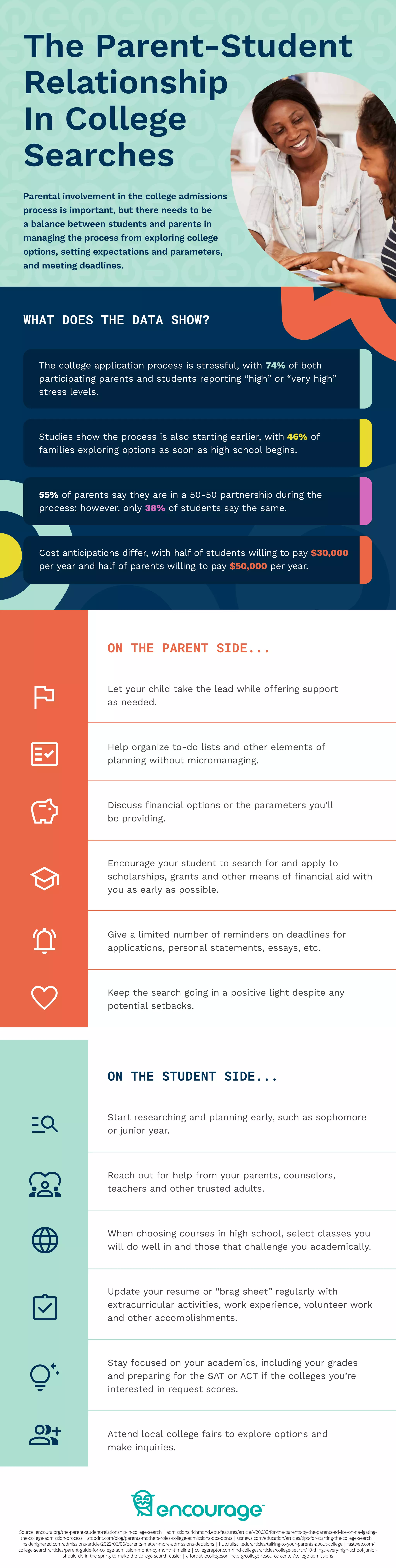
Has your child begun expressing interest in attending college? If so, their aspirations might outweigh their resources. For example, if a student is interested in attending a private school rather than a public one, their family might not be able to support just how much more expensive these colleges are compared to their public counterparts. That said, many private schools offer generous scholarships to potential students. This type of scholarship aid is not guaranteed, but its potential availability is something to consider as your child evaluates options. The same can be said for public schools as well, as there are a number of potential scholarship options out there. Planning for your child’s future college experience can be stressful for everyone involved. Having open, candid discussions about the cost of attendance, being transparent about finances and helping your teen explore ways to realize goals can make the process smoother and more rewarding in the long run. To learn more about the ways you can ease into these discussions with your child, inspect the resource paired alongside this post.

The Parent-Student Relationship In College Searches for more information on the college search process, be sure to check out the Encourage App

read more
Parenting

Is it true that you are Trying to Save Time With Permissive Parenting?

Tolerant child rearing is one of the sorts of child rearing styles wherein the parent and the youngster normally get along together. Notwithstanding, there are generally insignificant social desires set for the youngster. There is likewise for the most part no plainly characterized set of rules so the youngster is allowed to do whatever the individual needs. Some state that tolerant child rearing can be useful for the youngster in the improvement of experimentation and investigation. It has a few downsides.

Guardians, who have occupied calendars, may will in general have a tolerant child rearing style. Occupied guardians styles of decision are frequently at the edges of the scope of styles. These guardians, having brief period to manage their youngsters, permit an opportunity of practices, with barely any cutoff points, on their kids. Kids may get those things they need or particularly request. This might be in light of keeping the harmony in the family.

The kids in these family units might be inconvenient influenced in their advancement of social and network aptitudes. Kids feel a lot more secure with reliable age suitable cutoff points and limits. In this sheltered condition, they will in general get the consideration, love, and direction that they particularly require in their early stages. Tolerant child rearing might be rehearsed by guardians who had a severe childhood and in a craving to introduce the contrary condition to their youngsters. There is a contrast between receptiveness to investigation and leniency.

The general ramifications is that tolerant guardians may confront the aftereffects of getting too much permissive with conduct. Conduct restrictions are proposed to show the kids how to sum up known cutoff points to self-protection and self-inspiration. Some tolerant guardians yield to fits of rage just with the goal that the difficulty of the fit of rage closes. Some likewise sense a fit of rage and yield to evade the fit of rage out and out. This activity really shows the kid to utilize fits to control the responses of their folks.

A portion of the qualities of youngsters who have been raised by unnecessarily tolerant child rearing are regularly adolescence, failure to control motivations, an absence of center, and powerlessness to acknowledge obligation. As grown-ups, these kids could likewise think that its difficult to act naturally adequate or dependably autonomous.

It is critical to find all the data about tolerant child rearing. Clearly, I have spoken to a fairly negative perspective on lenient child rearing. It has downsides. You will need to peruse progressively about any constructive outcomes that are available with utilization of this style of child rearing. I solidly accept that it is each parent’s, inside the family structure and objectives, choice and duty to pick faithfully how the family will be organized. With the goal for youngsters to go into the universe of today also adjusted people, show them how to pick their own activities, qualities, and abilities, and acknowledge the constructive or contrary results of their activities.

You can look for more data about tolerant child rearing on the web, through some child rearing care groups, or your neighborhood curator will be glad to help you in discovering more written word regarding the matter. To Your Parenting Success

Life is loaded with difficulties for occupied guardians, and child rearing is a major one. It is safe to say that you are Trying to Save Time with Permissive Parenting?

read more
Parenting

Joint Parenting Time Schedules in the Parenting Agreement

Many separated and isolated guardians need to figure out how to settle on a child rearing understanding that lets the mother and father both be associated with the kids’ lives. One approach to do this is to make a joint child rearing time plan. In a joint calendar, the two guardians invest noteworthy energy with the kids. The mother and father are both dynamic in bringing up the youngster, and the two guardians have contribution to the kid’s life. Here are a few interesting points when choosing about a joint child rearing time plan for your child rearing understanding.

Guardians considering a joint child rearing time plan for their child rearing understanding need to consider a few issues. With the goal for this to work the guardians need to live close enough to have the kid switch family units as often as possible. The guardians additionally need to live near to the youngsters’ school on the off chance that they are sharing weekday care. It can likewise be costly for the mother and father to both have everything that the kid needs. They should buy two of everything so the kid’s condition doesn’t have intense changes. The guardians likewise need to build up an approach to discuss as often as possible with one another about the youngster. Both the mother and father should be refreshed on significant school occasions, schoolwork, and different things going on in the youngster’s life. They likewise need to set up a framework so the kid can keep sorted out while exchanging family units. The guardians need to ensure that the kids approach athletic equipment, school supplies, and different things while in the two houses.

Guardians can talk about with one another how they will defeat the difficulties related with a joint child rearing time plan and can remember the answers for the child rearing understanding. For example, they can consent to have a brief gathering once per week to refresh each other on what is happening. They can likewise enable the kid to sort out a schoolwork organizer so he can monitor school supplies. It might likewise be useful for the guardians to have a correspondence log that they send with the kid each time the youngster switches homes. The guardians can put school declarations and other data in the correspondence log so both the mother and father comprehend what is happening.

On the off chance that it isn’t plausible for the guardians to have a joint child rearing time plan during the school year (once in a while the youngsters need more consistency) they can set up a timetable where the kid lives with one parent for most of the year (with week night and end of the week visits to the next parent) and lives with their other parent throughout the mid year and during breaks in the year. There are numerous calendars guardians can decide to make a joint timetable work for their circumstance. They should consider what is best for the kid and what works for each parent’s timetable.

In the event that the mother and father are eager to invest the energy, a joint child rearing time calendar can be a decent arrangement in the child rearing understanding. The kids can be with the two guardians and have the association of both a mother and father.

Infographic Created By Goldberg Law Office, Experienced Illinois Medical License Defense Attorney

read more
Parenting

Parental current sense and autonomous parent

For some, being a parent comes naturally. In fact, many mothers first time have no problem dealing with their newborns. From the moment the child was born, by breastfeeding to interpret their cries, these parents simply seem to do the right thing at the right time. It’s calm, confident, good sense of parenthood.

However, many parents are struggling to expand their children. It does not mean they are bad parents. This means that they have to perfect the parenting skills they have already and also get new skills. Parents can always benefit from some of the most effective parenting techniques in this method to become more effective parents to their children.

A particular system or method that the experts know to be quite effective in the lifting of children would be held on this method of parenting of common sense. Full parenthood or CSP is a practical parenting process, based on daily skills, applying these skills naturally in different situations. Sometimes it is easy to detect these natural consequences. An example is a child who reverses a vase of water and rough flowers. The natural consequence would be for the child to clean the disorder. Parenting of the common sense includes logical strategies as well as easy-to-learn techniques that address the problems of discipline, communication, decision-making, self-control, family relations and education.

Some of the goals suggest that this method would include:

1) Develop a conceptual framework to understand the behavior from a family or relationship point of view

2) Develop an understanding of scholarly parental responses that affect children’s behavior

3) Develop practical or “common sense” responses for the behavior of your children

4) Develop practical tools that can be used in parental children

5) Develop skills to encourage and reward the appropriate behavior

5) Use a positive approach to negative or undesirable behaviors

6) Incorporate a lesson with each incident of undesirable behavior

Using the common sense parenthood method, a parent can easily become a more effective and loving parent. As a parent follows its own family goals, involving children in the process creates a more fluid way to success.

Common sense, parenthood is familiar to schools, communities and organizations. It can be a stress relief factor to help parents develop the skills needed to improve their children’s behavior. Continue searching for research to improve your parenting skills. The parental style of common sense can be the method for you and your family.

read more
Parenting

Legitimate Parenting Style and Its Effect on Children

Chris was raised with legitimate child rearing style by their folks with exacting control. They never kind about his sentiments and had demonstrated no enthusiasm for his wants and emotions. On the off chance that he arrives behind schedule from school only for 10 minutes, they used to reprove him. Rebuffing by beating and chiding was their standard propensity.

Chris was a decent kid. He was acceptable at concentrated in school and consistently complied with his educator, yet he was regularly used to be desolate and pitiful and never discovered life fascinating. He had finished his graduation and found a decent line of work. He got hitched and turned into a parent for two youngsters. It was consistently in his psyche that he ought to never treat his kids the manner in which he had been dealt with. He gave enough significance to their emotions. He needed them to be feel pleased with being his kids. Chris was a mindful dad. He used to invest great energy with his kids by dealing with them with adoration and love, playing with them normally, speaking with them and tuning in to them. Chris consistently felt that his youngsters’ sentiments were a higher priority than his emotions. He generally offered significance to their requests and emotions more than his wants. He never thought his life was significant so he was mostly keen on his youngsters’ needs and gave a lot of significance to them than him. Due to such style of child rearing, he turned into a tolerant parent. Visit us to know more about mother child rearing responsible parenting.

The result of dictator child rearing style is that he never felt significant about him. Because of being a tolerant parent, his kids grown up with requesting nature, feeling that they were the best and merits more significance than others and were not conscious and minding towards others.

Both the child rearing styles referenced above are wrong child rearing styles.

There is another child rearing style called cherishing child rearing, is a child rearing that offers significance to both the kids’ and parent’s wants and sentiments. Cherishing guardians regularly won’t attempt to confine their youngsters with the exception of on the off chance that security and wellbeing matters. Simultaneously these guardians won’t permit their youngsters to order them. They won’t disturb their kids and will they permit their kids to aggravate them. They will give equivalent significance to them just as their kids.

Adoring guardians confine their kids from awful conduct and don’t permit their youngsters to control their cutoff points. These guardians never stress over dismissal by their youngsters as they are certain and esteem themselves without a doubt. They treat their youngsters as complete people despite the fact that their temperament is unique, they don’t confine their opportunity and yet these guardians guarantee that they grow up with adoration, friendship, trustworthiness and control.

In the event that you need to be a caring guardian, first you need to overlook your past on the off chance that you had raised with tyrant child rearing style. On the off chance that you raised with legitimate child rearing style, you will have fears of control and dismissal hence you will attempt to over do your things as you would prefer not to do something very similar to your kids out of dread of dismissal by them. You will consistently have the dread of being dismissed or constrained by them while child rearing your youngsters. So first you need to overlook how you had been raised or mend the injuries your folks had caused on you so as to keep up a characteristic child rearing style that is cherishing child rearing.

To bring up a solid kids, you need to support your injured youngster in you. Except if you do this you won’t have the option to beat your feelings of trepidation and these will reflect in your everyday child rearing your kids. We need to remember that number of individuals who are alcoholic, sedate addicts and utilizing against misery drugs is expanding. The crime percentage is likewise expanding as there are progressively number of individuals are in detainment facilities contrasted with before. This might be expected to either legitimate child rearing style or lenient child rearing.

read more
Parenting

Do You Really Need an Online Parenting Class?

I think it is a breathtaking method to get what you need. The Internet is viewed as one of the most significant assets for essentially everything. Did you realize you could enlist straightforwardly on the web? This is simple approach to get the data you have to assist you with learning new child rearing abilities, discover what future circumstances may emerge, and discover answers for the difficulties you at present face as a parent. Here are a portion of different advantages to taking on a web based child rearing class today.

1. Most importantly, when you have tried out an internet child rearing class you can learn or potentially remark at your own pace. This settles on it the best decision for guardians who are working extended periods of time, or are in any case vigorously planned. How would you go to a network child rearing class when it is planned simultaneously as your little girl’s soccer match? Child rearing classes in the network make some set memories and day with next to zero adaptability.

2. This is additionally an extraordinary alternative, on the off chance that you don’t approach somebody for childcare at the hour of the network child rearing class. Consider the possibility that you are caught up with dealing with a kid that is sick. With a web based child rearing class, you can keep on learning new child rearing abilities and increase certainty comfortable. You should simply turn on your PC, take your classes, and talk with different guardians.

3. This choice additionally gives a lot of data on the different parts of child rearing. Joining up with one is really perhaps the most ideal approaches to acquire information on the various issues or difficulties that guardians face alongside arrangements. The beneficial thing about a child rearing class, which is led over the Internet, is that you can without much of a stretch solicitation data about the parts of child rearing in which you are intrigued.

4. Through using these online classes, you would likewise have the option to contrast your child rearing current child rearing abilities with that which the class instructs. You will have the option to see the assessments of different guardians in the remarks. You can trade thoughts by means of the remarks with different guardians. That way, you could decide aptitudes viability.

5. Arrangements will be promptly accessible, from which you can pick. You can you these proposed answers for set up a decent presence of mind child rearing system that you made explicitly for your family.

These are only a portion of the reasons why you might need to consider going to a web based child rearing class. You can without much of a stretch quest for some child rearing classes that are offered by pros and specialists in the field through perusing on the web.

read more
1 2
Page 1 of 2